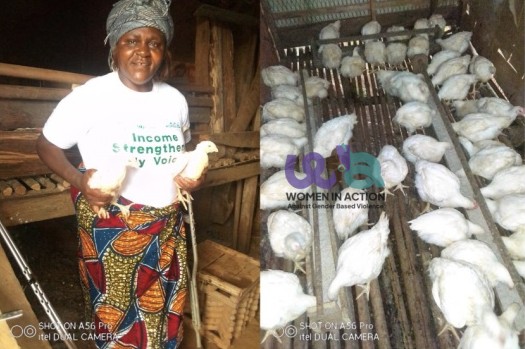
"Income from three weeks chicks restored my living" Mrs Njeck Elizabeth explained
Women in Action against Gender Based Violence (WAG) was selected through a tender as the UN Women local partner to implement a project title “Women and girls who have experienced/are experiencing GBV or at risk of GBV benefit from provision of, and access to quality services and are empowered to increasingly engage in decision making and Leadership in GBV Response, Mitigation and Prevention.
One of the outcomes of this project was “reduced risk of GBV through provision of livelihood opportunities among vulnerable women and girls survivors of GBV”. Within the framework of the activities to achieve this, WAG carried out need assessments to assist vulnerable women and girls with 3 weeks chicks, fish dryers, small ruminant mammals and pastry petty business capital. 69 vulnerable women and girls were identified and supported; 50 for 3 weeks chicks, 17 for fish dryers and 2 for pastry petty business capital.
Among the beneficiaries is Mrs. Njeck Elizabeth; 56 years old farmer, widow, mother of 7 and 12 grandchildren from Ashong in Batibo Subdivision who lost her one leg to a stray bullet in the farm in 2018 who benefitted from 50 three weeks chicks; 4 bags of feed, medications, 2 drinkers and feeders. She was taking care of her family with proceeds from her farm until she was handicapped and totally dependent on other family members and the community for her family’s survival.
“Having three square meals in my family became a dream which seemed unrealistic for more than 2 years". Looking at my children starve while I am still alive was the greatest pain I could not explain” Mrs. Elizabeth testified.
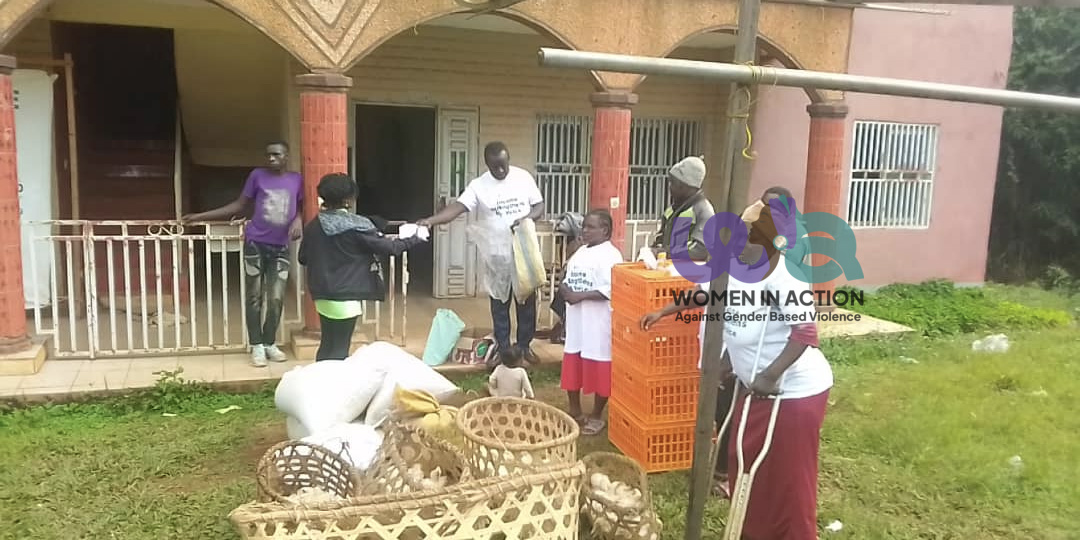
Since she could no longer generate any income for herself, life became so miserable for her entire family; the children who were schooling in town stopped and return to her side, there was basically no hope for her family until the day the field staff came across her.
Following the need assessment done, was assisted with three weeks chicks which she can grow and sell in her present condition. “The question of what can we do to help you improve your living condition sounded to me like a time bomb. I shed tears not knowing if they are tears of joy, surprise, change of story……., I just felt that I needed to cry”. The staff assured her that UN Women will fulfill her wish to have an income generating activity to rebuild her life.
Two weeks later, the first set of beneficiaries including Mrs. Njeck Mary received each 50 three weeks chick, 4 bags of feed, medication, feeders and drinkers.
During monitoring visits of chicks, Mrs. Njeck expressed her satisfaction and restoration of hope in her life. “Every morning is rejuvenating for me as I wake up to see my chicks grow”.
Three weeks after reception, the chicks were ready for sale and the beneficiaries including Mrs. Njeck sold the chickens. She was able to buy another set of 50 three weeks to put back in her cage and continue the activity, bought food stuff for her household, basic needs like body lotion, bathing soap and sent her son to a vocational training school.
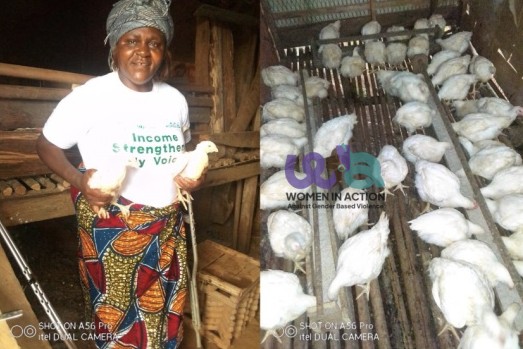
“Income from the three week’s chicks restored my living”; Mrs. Njeck exclaimed. When I sold the chicks and held the money in my hand, I felt a huge lump leave me; being able to solve my problems without having to beg from anybody made a river of relief flow in my heart; thanks to UN Women through WAG.
The beneficiaries of three weeks chicks have made tremendous change in their lives; expanding the business to buying and selling of palm oil, provision store, food stuff like yams, cocoyams, garri, etc. to improve on their living conditions.
This project was highly structured and funded following the upsurge of the North West and South West Anglophone crisis which generated different levels of GBV with the brunt of it on women and girls such as; kidnapped, engaged as cooks, sex slaves or raped for rituals to re-enforced spiritual powers, molested as a strategy to get ransoms from the parents, burning of homes/properties and gross internal displacements. As of August 2020, the North-West and South-West crisis had displaced over 1 million people.
Meanwhile, a remarkable increase of returnees to the North-West and South-West regions is being observed: while 204,000 returnees were reported in August 2019, 361,000 returnees were reported in August 2020. These returnees are typically those who displace into the bush after localized conflict and return soon after. The number of IDPs from the North-West and South-West in the Littoral, West and Centre regions has also increased: from 224,000 in 2019 to 297,000 in 2020. A majority of the displaced are women and children amongst who are unaccompanied and separated children. The sufferings of this group are compounded by the social norms that put women and girls at risk of GBV which many are survivors and are in gross need of humanitarian support.
The CERF project came in to assist women and girls survivors of GBV and those at risk of GBV to livelihoods and agency to facilitate their access to life saving humanitarian services and facilitate their voices in promoting GBV accountability in humanitarian contexts. The beneficiaries of livelihood support particularly Mrs. Njeck are just one of the realized impacts of this project.
Conclusion
In as much as livelihood support has improved on the living conditions of many beneficiaries, there are still so many vulnerable women and girls who were affected by the crisis and need this kind of assistance to restore their living like Mrs. Njeck.