From survival to resilience: How WA is transforming the lives of women and girls in conflict-affected communities
Through DG-ECHO funding and in partnership with UNFPA Cameroon, WACameroon has strengthened access to life-saving Gender-Based Violence (GBV) prevention, response and psychosocial support services for women and girls in hard-to-reach communities across the North-West and South-West Regions.
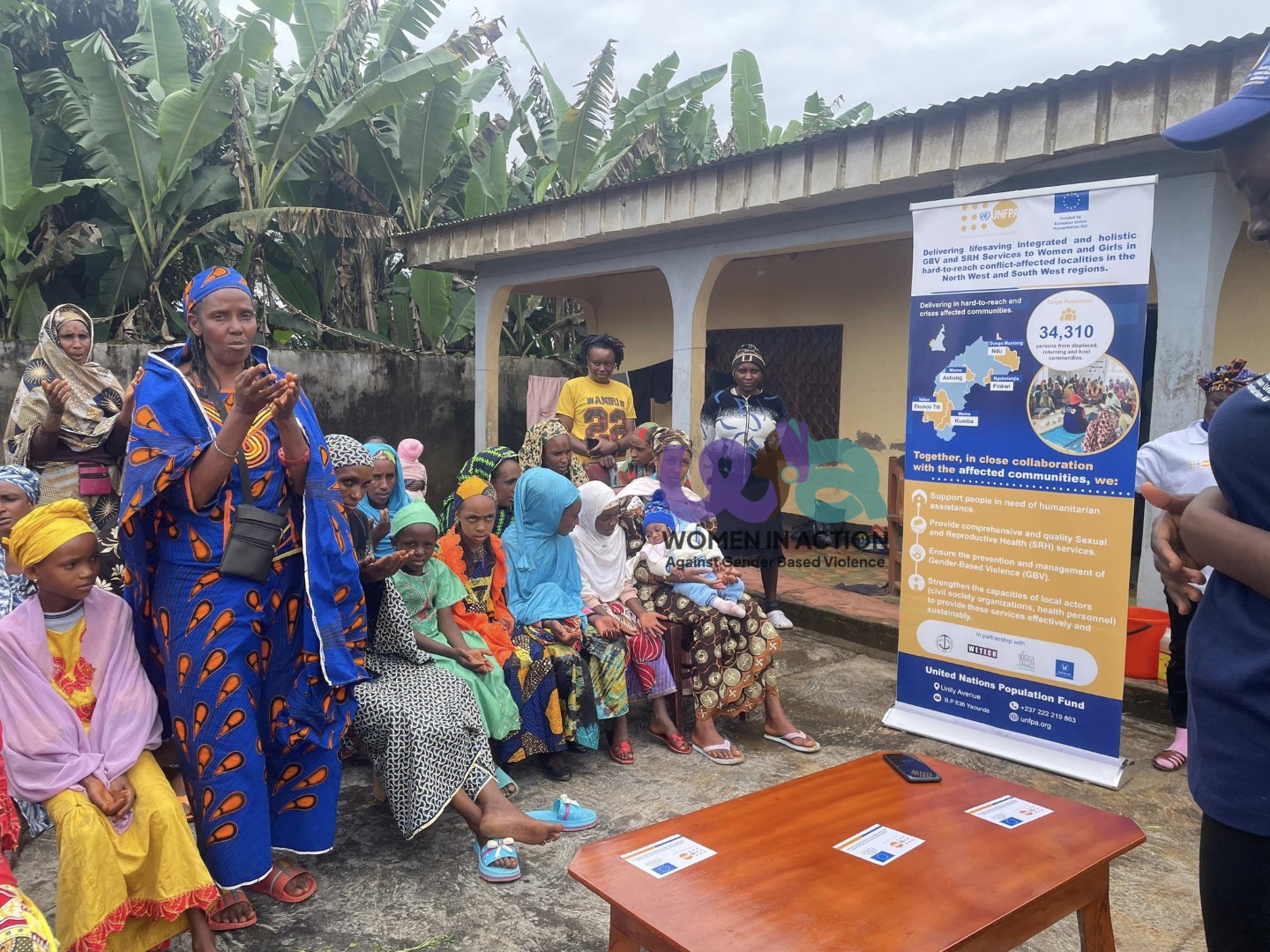
Educative Session with Indigenous Women and Girls at the Ashong Women and Girls Safe Space
- 3,611Women and girls accessing safe spaces
- 2,260+ GBV survivors receiving case management
- 14,127+People reached through awareness activities
- 247Community awareness sessions conducted
Reaching women and girls with essential services
For women and girls living in conflict-affected communities in Cameroon's North-West and South-West Regions, access to protection, healthcare and psychosocial support remains a major challenge. Insecurity, displacement and weakened community protection systems have increased their exposure to Gender-Based Violence (GBV), while limited access to essential services makes recovery even more difficult.
Recognising these challenges, WACameroon, with funding from the European Civil Protection and Humanitarian Aid Operations (DG-ECHO) and in partnership with UNFPA Cameroon, implemented the project “Delivering Lifesaving Integrated and Holistic GBV/SRH Services to Women and Girls in Hard-to-Reach Conflict-Affected Localities in the Northwest and Southwest Regions of Cameroon.”
Implemented in Ndu (Donga-Mantung), Ashong (Momo) and Finkwi (Ngoketunjia), the intervention focused on improving access to GBV prevention, mitigation and response services through community engagement, survivor-centred case management and psychosocial support.
One of the project's significant achievements was the establishment of three Women and Girls Safe Spaces in Ashong, Ndu and Finkwi. These spaces provide women and girls with safe environments to access information on GBV, psychosocial support, ego therapy and referrals to other essential services.
So far, 3,611 women and girls have accessed these safe spaces, with 70% expressing satisfaction with the services received. Beyond establishing safe spaces, WACameroon provided GBV case management to more than 2,260 survivors, while 180 survivors received transportation assistance to access essential life-saving services. Psychosocial support also contributed to improved mental well-being, with 60% of reported cases indicating improved mental stability. A further 452 women and girls were referred to health and legal facilities or participated in skills-building and recreational activities.
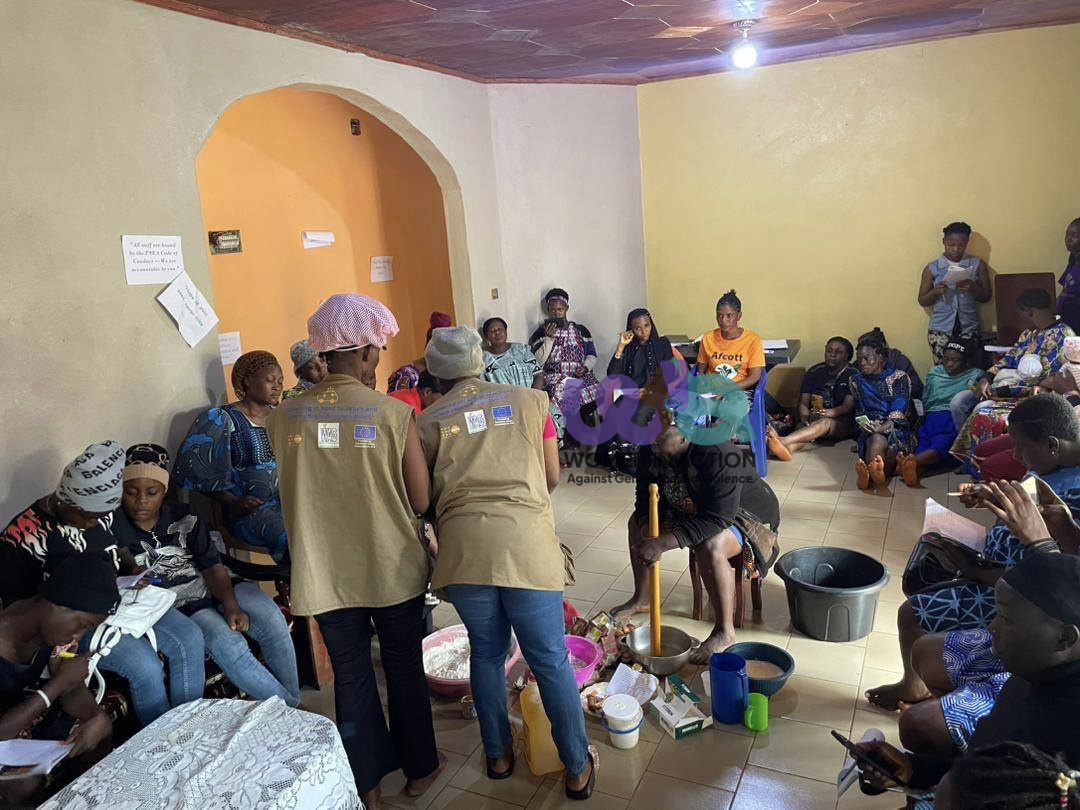
Skill Building in Pastry Making at the Finkwi Women and Girls Safe Space.
Communities Becoming Champions Against GBV
Recognizing that sustainable GBV prevention requires collective responsibility, WACameroon invested in community mobilisation and awareness-raising across the three intervention sites.
Through 247 awareness-raising sessions, including 131 door-to-door sensitisation sessions, 75 educational talks and 41 mass awareness sessions, the project reached more than 14,127 people, including 7,820 women and girls.
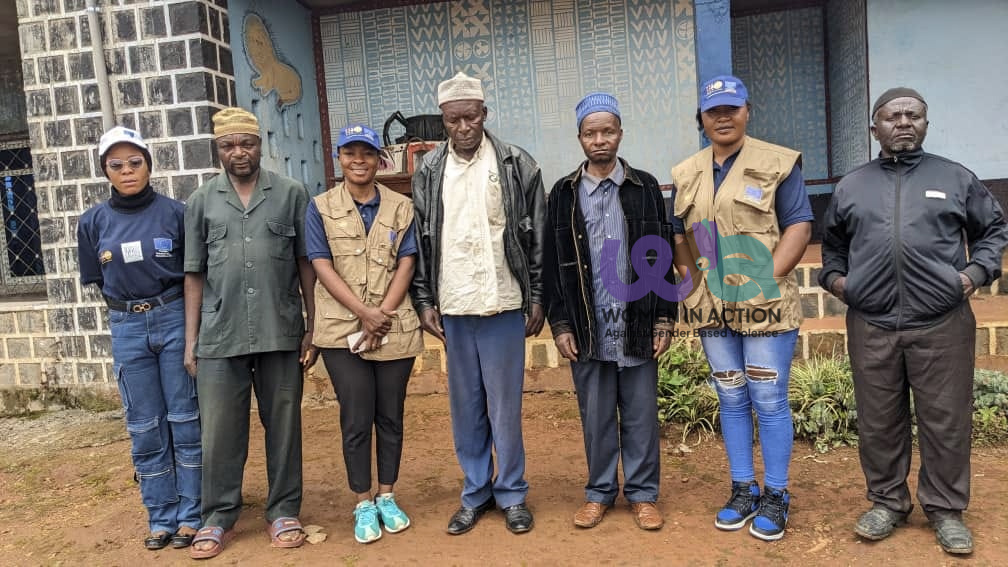
The intervention also engaged internally displaced persons, persons with disabilities and indigenous communities, ensuring that underserved populations were not left behind. An important outcome has been the growing involvement of community stakeholders, particularly traditional leaders, who supported mobilisation, provided spaces for sensitisation activities and facilitated the identification and referral of GBV cases. Community members are increasingly becoming advocates for safer communities, inclusion and positive social norms.
Establishing Collaboration with the Traditional Council of Ndu to Cement the roots of the project in the community
From Trauma to Independence: Bih's Journey of Recovery
Behind the project’s results are individual experiences of recovery and renewed hope. Bih (pseudonym) was referred to WACameroon after experiencing prolonged physical, emotional and economic abuse.
Through 12 trauma-informed psychosocial counselling sessions over three months, she received support to rebuild her confidence, develop coping mechanisms and regain control over decisions affecting her life and her children. Her depression assessment score decreased from 25, indicating severe depression, to 5, indicating minimal depression. She also put a safety plan in place, relocated with her children to a safer environment and reconnected with a local women’s support group.
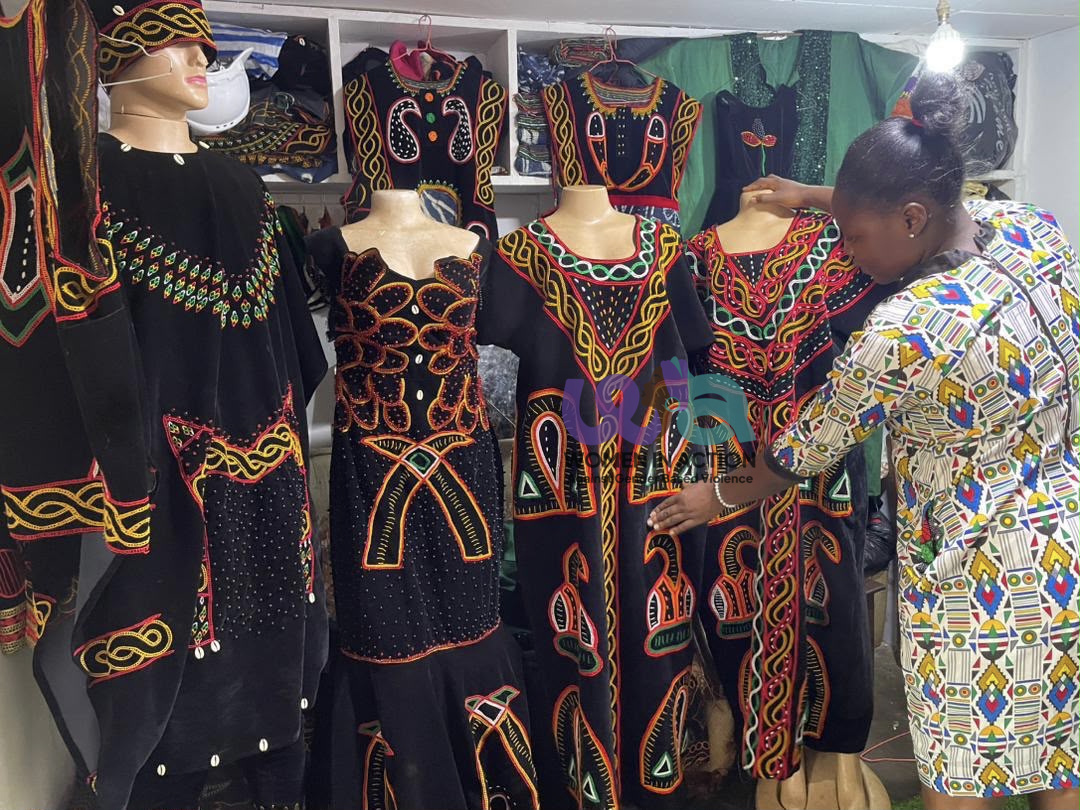
A referral to WACameroon’s livelihood department enabled Bih to strengthen her embroidery skills. She also received a start-up kit, which helped her establish a small embroidery business and take steps towards greater economic independence.
“This environment has given me hope that I am stronger than what I am going through. It has given me a chance to make a choice whether to be broken or to be strong for myself and my children.”
Sustaining the Impact
The project’s achievements show how survivor-centred services, community participation and coordinated action can make a meaningful difference in the lives of women and girls affected by conflict and GBV. Sustaining these gains will require continued investment in local capacities, stronger partnerships and ongoing community support for the established safe spaces.
WACameroon remains committed to strengthening community-based protection systems and ensuring that women and girls, regardless of their circumstances, can access the support, dignity and protection they deserve.
Together, we can build communities where women and girls are safe, supported and empowered.
Implemented by WACameroon in partnership with UNFPA Cameroon, with funding from DG-ECHO.